


A Strong Balkan Woman Hiding Her Identity - an Editorial Review of "Sirma"
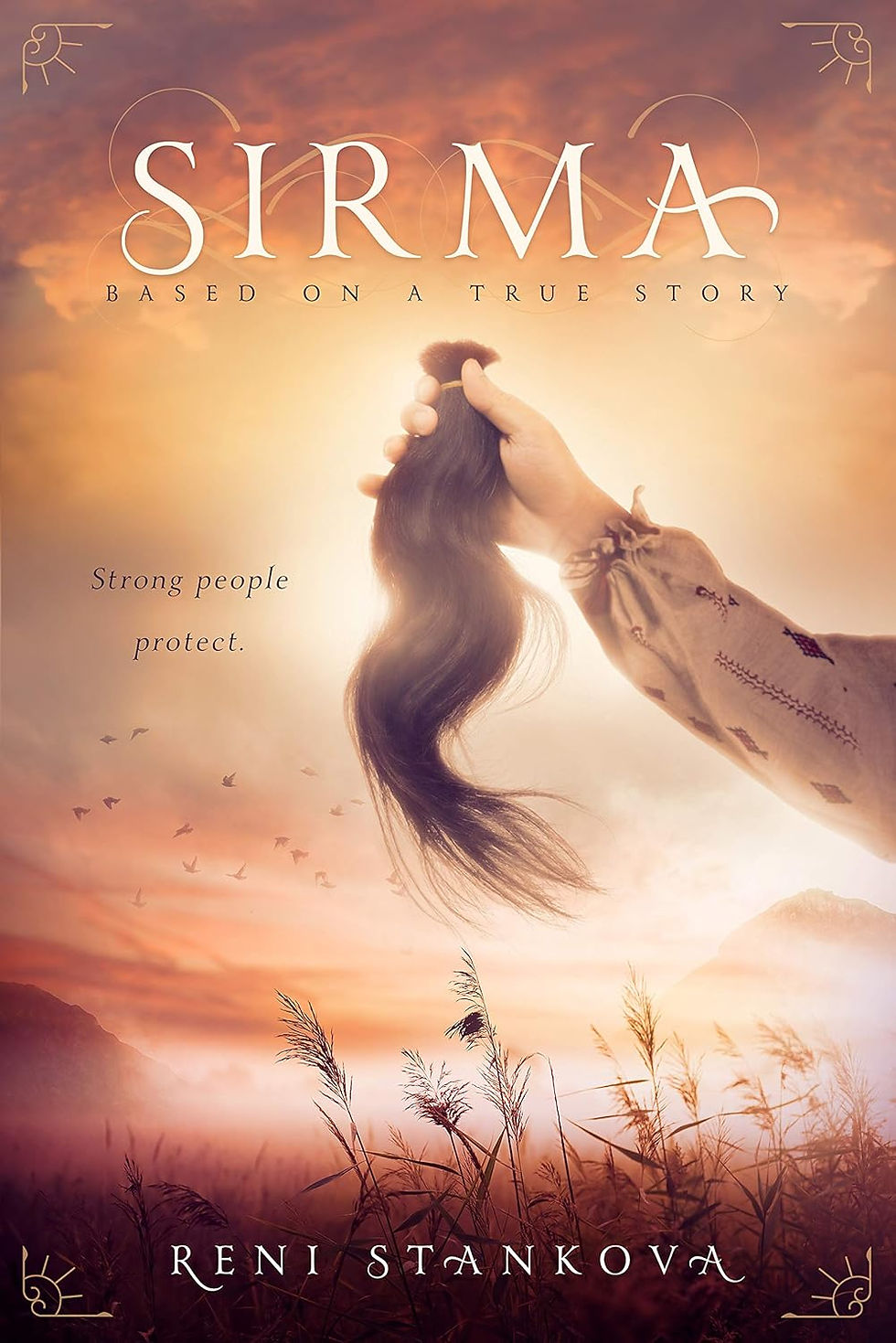
Book Blurb:
For the lovers of strong female leads, based on true historical events.
19th-century Eastern Europe.
Sirma's world is shattered to pieces when she bears witness to the abuse and murder of her two best friends by a gang of mountain outlaws. The village elders do nothing because they fear the wrath of Hamza Bei. Not long after, the same outlaws raid Sirma's village, and she is fed up with keeping quiet.
She disguises herself as a man and takes the lead of her own gang dedicated to protecting the mountain villages and searching for Hamza Bei to put a stop to his tyranny. She must clash with outlaws, survive the mountain wilderness, and keep her men from becoming the monsters they've sworn to fight. And her comrades don't even know she is a woman.
Inspired by the true story of Sirma voivode, a legendary figure of the Haiduk resistance. A fierce novel for fans of strong female leads, Balkan history, and survival against the odds.
Book Buy Link: https://geni.us/TZYS4b
Author Bio:

Reni Stankova is an internationally recognized author of historical fiction and LGBTQ+ fantasy. Based in Bulgaria, she writes in both English and Bulgarian, bringing a unique cultural perspective to her storytelling.
Stankova is the creator of The Heaven Trilogy, beginning with The Enemy of Heaven, which has been praised for its complex character dynamics and inventive take on the "angel and demon" trope.
Her works focus on strong heroines, power couples & diverse characters who challenge the status quo. There is always emotional depth, queer representation, and immersive world-building, from the historical landscapes of the Balkans to original fantasy realms.
Reni is also the author of The Novel Outline Toolkit, a series designed to provide aspiring writers with practical guides for planning single novels and trilogies, and organizing their creative process.
Follow Reni Stankova to receive notifications about new book launches and special editions.
Editorial Review:
Title: Sirma
Author: Reni Stankova
Rating: 4.1
“Sirma” by Reni Stankova is a historical fiction novel based on the real-life figure Sirma Strezova Krasteva (known as Sirma voivode), a Bulgarian woman who became a haiduk- a guerrilla fighter and an outlaw in the Ottoman Empire during the late 18th and early 19th centuries. The story begins in 1783 in the village of Tresonche, where young Sirma, a spirited, competitive girl is running, climbing trees, and out-shooting the boys with a slingshot given to her by her brother. Her idyllic childhood is shattered when her best friend Ruzha is kidnapped by Albanian outlaws and another friend, Yana, is brutally assaulted and dies. Sirma, who hid during the attack, is consumed by guilt and rage. Before that tragedy, however, Sirma experiences a smaller but profound moral crisis. She kills a bird with her slingshot, and her friend Ruzha weeps over its tiny grave. That night, consumed by guilt, Sirma asks her father what to do.
“That’s right, you shouldn’t kill,” he said. “You’re big and strong, and the birds are weak. Strong people shouldn’t trample the weak to prove themselves. Strong people should protect. If you want to atone, be good and protect the weak.”
These words by Sirma’s father redefine strength in a world where power is usually measured by dominance, and by who can kill, conquer, or intimidate. The reader receives this as a moral anchor for the entire story and as the moral framework that allows Sirma to become a haiduk without becoming a monster. The simplicity of the language hits with the force of a proverb, it is easy to remember and easy to repeat, and the reader leaves the scene carrying the line like a lens through which to judge every character’s actions for the rest of the novel.
“When I was a child, I looked for any excuse to go up the mountain,” she said. “You might think that people get fed up with it after so long, but I haven’t. It charges me.” “How long have you been away from home?” Militsa asked. The voivode thought about it. “This is the eleventh winter,” she said. “Leaving home was easy. I’m not a patient person, so I didn’t think twice. But I admire those who are.”
This passage marks a rare moment of unguarded self-reflection from Sirma, who throughout the novel is defined by action, but here, speaking to another woman who sees through her disguise, allows herself to articulate the passage of time, the weight of her choices, and the person she has become. She cannot speak this way to her haiduk brothers who know her only as their voivode, but Militsa sees through the disguise, and in that recognition, Sirma finds permission to be vulnerable. The reader meets her not as the innocent girl fearful after killing a bird, but as a seasoned leader who has learned that strength includes softness, that action includes reflection, and that impatience can be balanced with admiration for those who build slowly.
“Let me kill the loudmouth, voivode,” he said. He had already prepared his pistol. The others wanted to see a bullet going through his head, too. It was the natural order of things—an enemy should die. It was how the haiduks did things. Instead, Sirma kneeled in front of him. “I beg for your forgiveness.” Everyone gaped at her in confusion, and so did the young bandit. His mocking smile slowly vanished from his face. This was the last thing he expected to hear from his enemy. Forgiveness wasn’t a frequently uttered word in these parts. “This is your only chance,” Sirma warned. “If you come back and try to kill any of us again, I’ll end your life.”
Decades later, after countless battles and losses, Sirma faces a different kind of test. As a haiduk who has been killing enemies who threatened the weak, she is now facing a man who tried to assassinate her. She however chooses something far more difficult- forgiveness. The reader feels that this reversal of expected roles demonstrates that she has internalized her father’s teaching more deeply than ever, by not looking to prove superiority and by wanting to break the cycle. In this climactic act of mercy, Sirma transcends the cycle of revenge and chooses hope over certainty, a choice that defines her legacy even though it later costs her heavily.
The most outstanding thematic achievement of “Sirma” is its refusal to romanticize violence while still justifying it, unlike many historical novels about guerrillas that either glorify bloodshed or moralize against it. Remarkably, Stankova gives Sirma a clear moral framework and then spends the entire novel testing that framework. The theme of protection versus revenge is handled with extraordinary nuance, as is the theme of disguise and identity as well as the theme of mercy and the cycle of violence, the latter of which has been resolved with tragic honesty. The prose feels propulsive, utilizing short chapters and scenes that cut quickly. The novel never tells the reader how to feel, instead, it shows and because of that makes the reader feel deeply.
Reni Stankova has written something rare, a novel that is both a page-turning adventure and a profound meditation on strength, sacrifice, and the possibility of breaking cycles. Sirma voivode is a character who deserves to be remembered, and this novel ensures she will always be.


Comments