


An Act of God or Something Earthly and Sinister? - an Editorial Review of "Death in the Church"

Book Blurb:
A controversial priest dies suddenly on the steps of the great cathedral, moments before his long-awaited restoration after years of excommunication. Church leaders hail his death as a divine sign.
But Captain Aurelius - the trusted imperial aide assigned by Constantine himself to investigate - is not convinced. Was this truly an act of God, or the work of someone far more earthly? As he retraces the priest's final moments and unravels the decades of disputes that made the man a target, Aurelius uncovers secrets capable of igniting civil war in both the Empire and the Church.
Named for the philosopher-emperor of earlier days, Aurelius soon realizes that the future of his world may hinge on what he discovers. And as the lines between faith and ambition blur, he must confront a question more dangerous than any enemy.
Is his world being led by saints... or by demons?
Book Buy Link: https://geni.us/WbVd
Author Bio:
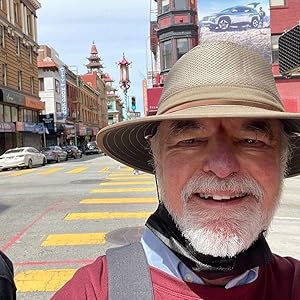
Patrick W. Andersen is a novelist living in San Francisco. He worked as an award-winning reporter and editor for a number of years before focusing his writing on fiction. He has published several novels and a collection of short stories.
Editorial Review:
Title: Death in the Church
Author: Patrick W. Andersen
Rating: 4.5
“Death in the Church” by Patrick W. Andersen follows Captain Aurelius, a Roman soldier tasked by Emperor Constantine to investigate the death of the priest Arius, who collapsed outside a cathedral in 336 CE. The novel explores the collision of faith and power, institutional cover-up, and the cost of choosing peace over truth. It also examines how empires and churches alike manufacture “miracles” when facts threaten the order they have built.
“Father, I would love to preach. But I’ve only recently been readmitted to the church after excommunication. Do you think it is too soon? Will someone complain to Bishop Achillus that you have allowed the heretic to resume his evil ways?”
This moment occurs in Alexandria in 313, decades before Arius’s death in Constantinople. Arius is a tall, lean priest, beloved by the people of Alexandria for his songs and his teaching that the Son was created by the Father, rather than co-eternal with Him. This belief has already drawn the ire of church authorities and led to his excommunication. The scene establishes the conflict between Arius and the bishops, which is born out of their discomfort. The reader who meets Arius here smiling at his own reputation and looking untroubled by the controversies that surround him will remember these words when the investigation later reaches its end.
“Arsenius is missing,” he said. “We do not know where he has gone. But we will search. We will pray. And we will trust that God sees what we do not.” Jonas looked toward the empty doorway of the guest house. The stillness inside felt wrong, like a breath held too long.”
This moment occurs when a Melitian bishop who was gathering evidence against the Alexandrian church vanishes overnight. Here, the reader senses that the novel is tracing the roots of a crime backward through time, showing how the forces that killed Arius in Constantinople could already have been at work in the Egyptian desert years earlier.
“It is the opinion of this investigator that no further inquiry should be pursued. The priest Arius, having been the cause of long discord within the Church, met his end in a manner that has brought peace among the brethren and relief to the faithful.”
This moment occurs in Aurelius’s quarters after the investigation has concluded. The reader watches him write a lie in what he calls a choice for peace. You feel the weight of that choice, not as cowardice but as the logic of empire itself, an empire where the truth serves no one’s interests.
Andersen has written a tale that makes the early Church emerge as a political entity where councils function as tribunals and theology serves as a strategy to preserve unity at any cost. His writing reflects that cost, moving with the discipline of a procedural and grounding the investigation in the details of the geography of a city whose half-built forum becomes the stage for a death the empire will not call a murder. The structure places that murder at the center and uses the inquiry to expose the fault lines beneath the surface of Christian unity. The weight of the story falls on the gap between the miracle the Church proclaims and the murder Aurelius documents. The reader knows the truth, and it is that knowing that keeps them turning the pages.
Readers who appreciate historical fiction where institutions are examined without sentiment, where the investigator is complicit in the cover-up, and where the central question is not who killed whom, but why the truth cannot be spoken, will find much to consider in “Death in the Church.”
To have your historical novel editorially reviewed and/or enter the HFC Book of the Year contest, please visit www.thehistoricalfictioncompany.com/book-awards/award-submission



Comments