


My Kind Refuses to Die Out - an Editorial Review of "M"
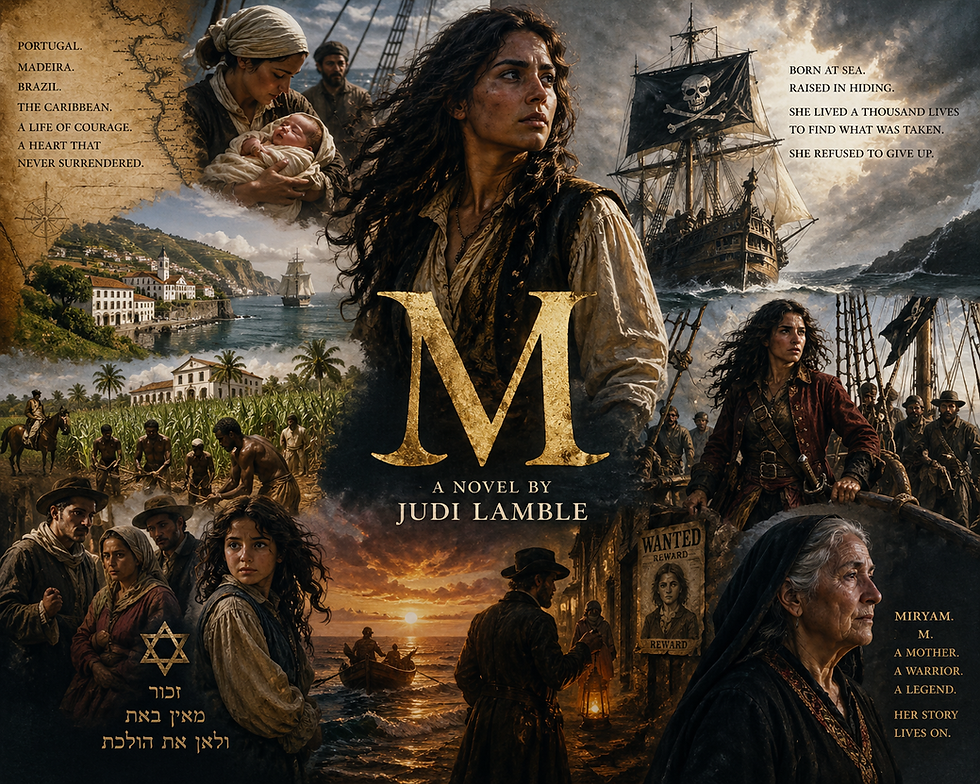
Book Blurb: Coming soon!
Book Buy Link: Coming soon!
Editorial Review:
Title: M
Author: Judi Lamble
Rating: 4.4
"M" by Judi Lamble is a riveting historical adventure novel that follows a Jewish girl named Miryam (later called “M”) who is born at sea while her family flees the Inquisition in Portugal. She grows up in Madeira and Brazil, survives wars, famine, and betrayal, becomes a pirate and privateer in the Caribbean, loses her husband to murder, has her young daughter kidnapped by her own father‑in‑law, and fights to survive and find her child. The story follows her from childhood to an old age and tells an action-packed story about how she refuses to give up. It also shows what life was like for Jewish refugees, slaves, and pirates in the 1600s.
"My kind refuse to die out. Though they harass, arrest, imprison, torture, hang... mock us, though they seize our treasures now or after we’ve decomposed, we rise... Rarely do we return spoils to their original owners, but we enjoy irritating conquerors like boils on buttocks... We earn our living as entrepreneurs, agents, go-betweens, schemers, spies, conspirators, scoundrels, deal-makers and double-dealers. In our best years, we run even with those who license us..."
Miryam's voice here establishes the novel's tone- defiant, gritty and resilient. "My kind refuse to die out" is a phrase that becomes a mantra throughout the novel, and one that foreshadows her life as an outsider, harrased and mocked, yet willing to take risks and rise again. You feel pulled to trust her as a protagonist and as a storyteller, and prepared for a journey that promises the triumph of endurance and survival against relentless persecution.
"I did not wish my name at sea to be false, but it needed to
command respect among pirates and incite terror among enemies. I needed a name that would repel assumptions until I’d earned the fearsome reputation to which it deserved to be attached. I finally announced, “Call me M.”
Many years later, after shipwrecks, battles, and loss, Miryam sits down to choose her pirate name. From her birth as a fleeing refugee to the hanging of her brother, the death of her mother, the murder of her husband, and the kidnapping of her daughter by her own father-in-law, she lost everyone she loved. Here, refusing to be defined by others as a heretic, a woman out of place, or a bad mother, she carves her own identity. "M" feels deliberately ambiguous, reflecting her belief that she is comfortable nationless, a citizen of the sea. The moment makes the reader see her as strategic and knowledgeable, and it also develops a surge of respect and anticipation to see whether the name endures.
"Old lovers cast spells. Rather than mourn the present, Jacob drew me after him into the wide well of our past. We spread jam and goat cheese on matza and drank wine from a pair of crystal goblets he brought with him, imported from Amsterdam, and floated on our backs in cool
memories... We talked and laughed, then whispered and sighed. Jacob leaned forward to kiss me."
Here, Miryam steps back into a quiet tender moment with the man she loved before she became a captain. After scenes of sword fights and storms, this soft, lyrical moment feels like a breath. The reader sees her not as a legend but as someone who misses what was lost, developing deep affection and hope that she can hold onto this happiness. It is a moment that stands in stark contrast to the separations bookending the novel, proving that love can resurface across time.
Lamble's prose feel muscular and cinematic, she favors short, punchy sentences that mirror Miryam's no-nonsense voice, and keeps the language period-appropriate and the dialogue crackling with authenticity. She has a gift for vivid, unexpected verbs and nouns; example- Miryam doesn't just survive; she "gurgles like a drowning soul washing onto a new shore" and Pirates don't just annoy; they "irritate conquerors like boils on buttocks." The novel tackles huge, important themes including religious persecution, the Inquisition, slavery, piracy, gender roles, motherhood, and survival in a manner that feels effortless and organic, as if the history simply unfolds alongside her personal journey.
Miryam's arc is the heart of the novel and each stage of her development feels earned. Her framing as an old woman writing her memoir for her lost daughter is brilliant, and allows for flashbacks, foreshadowing, and a poignant sense of inevitability. The pacing is excellent. Action sequences have been balanced with quiet, reflective moments. bringing to life a novel that is without doubt carefully built.
"M" is a rare historical novel that educates, entertains, and moves. It gives voice to forgotten and is unflinching about violence and loss, yet ultimately hopeful. It's a triumph of research, craft, and heart.

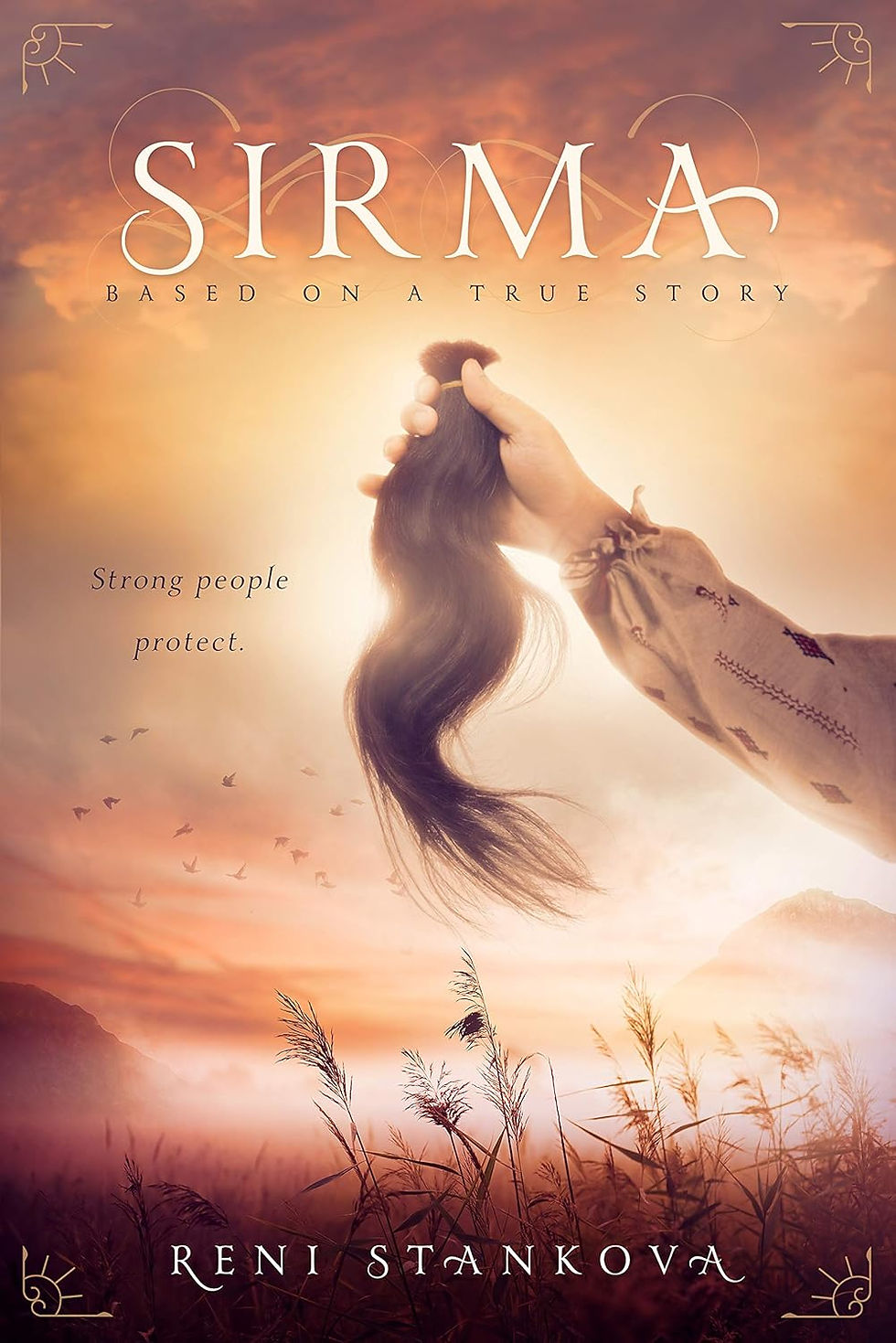

This sounds like a fascinating historical adventure, especially the way Miryam’s resilience carries through so many losses and changes in her life. I enjoy stories with that kind of determination, and space waves gives me a similar feeling of pushing through each challenge.