


Staying Ahead of a Kill Order - an Editorial Review of "Burn Notice"

Book Blurb:
"In the shadows, there is truth."
It’s 1984, at the height of the Cold War, and Colonel Theodore “Teddy” Roosevelt IV is a man on the run. A Special Forces legend, fourth-generation soldier, and great-nephew of a president, he led a team of CIA ghosts into the darkest corners of Southeast Asia.
When Colonel Roosevelt refused to carry out the last phase of a top-secret mission, powerful men buried him under fabricated charges. The road to redemption is treacherous. Now a hunted man, Teddy must stay ahead of a kill order written in the language of plausible deniability because he knows a dark secret—one so explosive, the shadow government in Washington will kill to protect it.
Book Buy Link: https://geni.us/iABz5
Author Bio:
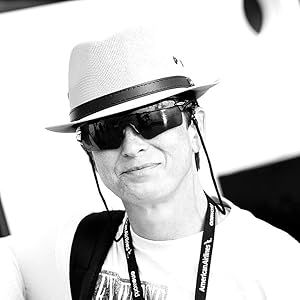
After a successful career in law enforcement as a field officer, explosives detection K-9 handler, and fatality traffic investigator, Angel Giacomo gravitated toward writing. She holds a degree in Political Science and History. A strong believer in helping veterans, Angel supports several veteran organizations. Her first book, a military thriller titled The Jackson MacKenzie Chronicles: In the Eye of the Storm, was published in 2020.
Angel has had many different careers. Her life has been a learning experience spanning more than 50 years. Examples of her experience include handling a bomb-sniffing dog, loading cargo planes, entering data at a computer, playing the trombone, washing dishes at a restaurant, and sacking groceries.
She has attended FEMA classes on Terrorism, Suicide Bombers, and Nuclear/Biological, handled explosives, and shot various weapons, from the M1 Garand to the AR-15, as well as many different pistols.
A jack of many trades and a master of none. Or maybe a few.
Editorial Review:
Title: Burn Notice
Author: Angel Giacomo
Rating: 4.0
"What does it mean to be a patriot when your own country declares you the enemy? Angel Giacomo's ''Burn Notice: Subnet Echo Directive Seven-Two'' forces this question into the sterile, terrifying light of a military hospital, where a decorated soldier is hunted not by foreign spies but by the very bureaucracy he swore to protect. We meet Colonel Theodore “Teddy” Roosevelt IV a decorated Special Forces legend not on a battlefield, but cornered in a North Carolina warehouse, running from powerful elements within the military apparatus. This isn’t a story of foreign espionage rather, a blistering investigation into a conspiracy that operates in the sterile hallways of military hospitals and the redacted lines of classified files.
"Teddy didn’t answer. He reached across the seat and flipped open the glove box. His sidearm was there, a standard military-issue M1911A1 Colt .45 caliber pistol. So was the compact field map—a coded overlay of old staging areas and fallback points from the Laos years. Not all of them were still useful. However, the one ahead—marked with a faint grease-pencil cross—had that old warehouse and a storm cellar, useful only when the weather turned bad since it was full of venomous snakes. The best tactical feature of the warehouse was its line of sight in three directions."
This early moment, as Teddy flees his pursuers, establishes the novel’s central conflict. The map isn’t just a tool, rather, a relic of a shadow war, symbolizing the hidden history Teddy carries. You get the sense that his flight isn’t from justice but from a system erasing its own sins. You are also made to understand that his greatest weapon isn’t his gun, but his memory, and that’s precisely what makes him a target. The fact that some of these sites are now useless, while one remains viable, a snake-infested storm cellar beneath an abandoned warehouse, signals that Teddy is operating in the 'afterlife' of a war the government has already tried to bury. The conflict is set: one man’ lived truth against the official, sanitized lie. This moment tells the reader that the real stakes of the story are, not physical survival but the control of a truth, and that Teddy is dangerous, because of what he knows.
“He’s been doing this all night,” the guard said, shrugging. “Just wants attention.” Cross moved closer and crouched beside Teddy. He placed his hand on Teddy’s forehead and then pulled it back. “He’s burning up. Turn him over.” The MP followed orders, rolling Teddy onto his back. The effort sent another spike of pain through his belly and chest. He clenched his teeth, breathing through his nose, trying to keep the nausea at bay. His gut twisted beneath his ribs as though something alive were crawling underneath them.
Here, what might at first feel like abstract conspiracy becomes terrifyingly personal. While Teddy is literally dying from appendicitis, the system designed to uphold order becomes a source of harm through indifference and procedural cruelty. This scene is a brutal metaphor for the entire plot. Teddy’s refusal to cry out is not merely stoicism rather, it reflects his deep-seated habit of enduring suffering alone, a habit forged in Laos and now turned against him by the very institution he served. His physical agony runs in parallel with the institutional rot that surrounds him, a system more concerned with preserving its story than protecting his life. This scene becomes a stark emblem of the plot in which a genuine crisis is misread, minimized, and worsened by those in power because acknowledging it would complicate their narrative.
"Teddy pushed his good hand under the blanket, moving slowly, aware of the tightness in his abdomen. The sidearm Cross had given him was gone. Of course, it was. But someone had replaced it with something else—a slip of paper, folded once. He pulled it out with trembling fingers and opened it. It contained a single handwritten line.
"You’re not alone anymore. – M
It bore no rank, name, or signature, other than a single letter to designate the writer—M. Yet he recognized the author by the slant of the handwriting. Merrit had good instincts. More importantly, she was adapting. That mattered now."
This simple, folded note left on Teddy’s chest represents the story’s crucial turning point. After chapters of isolation, betrayal, and clinical brutality, these four words emerge as a lifeline. “M” is Lieutenant Colonel Rachel Merrit of the JAG Corps, and her shift from 'by-the-book' investigator to a determined ally, marks the moment the conspiracy meets its match. It’s no longer just Teddy against the 'machine' rather, it’s truth-seekers within the system starting to dismantle it from the inside. This moment of quiet connection is more powerful than any action scene, signaling the birth of a much-needed trust.
Giacomo has populated this high-stakes world with characters who feel authentically worn by their roles. Teddy is a fantastic anchor, who emerges as physically vulnerable but mentally unbreakable. His journey from a fugitive to a patient, and then to catalyst is compelling even as it charts not just a fight for survival, but a struggle to preserve a conscience. The supporting cast is equally well-drawn. Colonel “Iron Vince” Cross’s journey from smug pursuer to guilt-ridden protector is a standout arc. The dynamic between Teddy and his off-the-grid allies, Jack “Ghost” Stratton and Eli “Stone” Red Horse, is conveyed with a gritty, unspoken history that needs no exposition. The novel’s structure is a masterclass in sustained tension. Giacomo uses short, timestamped chapters and clean, precise prose to create a breathless pace that mirrors the protagonist’s desperate fight for survival. The setting which is largely confined to the fluorescent-lit purgatory of a military hospital, becomes a character itself, a place where healing and hunting occur in the same corridor. While the web of black-ops history and protocols like “Sable” and “Legacy” is complex, it’s deployed with the confident hand of someone who knows the terrain, adding depth without bogging down the narrative or overburdening the reader.
"Burn Notice: Subnet Echo Directive Seven-Two" is a must-read for fans of meticulous military thrillers but it will resonate even more with readers drawn to stories of moral injury and institutional corruption. It will also entertain those who loves tales of relentless resilience against impossible odds. It is undoubtedly more than a thriller, an invitation to reflect on how the most dangerous wars are often fought not in distant jungles, but in the places we are told are safe.
To have your historical novel editorially reviewed and/or enter the HFC Book of the Year contest, please visit www.thehistoricalfictioncompany.com/book-awards/award-submission



Comments